









Choosing the right turkey call can make or break your spring hunt. Every call type produces different sounds, requires varying skill levels and works better in specific hunting situations. More than 7 million wild turkeys now inhabit North America, giving hunters abundant opportunities to test different calling strategies in the field.
The best turkey call for you depends on your experience level, hunting conditions and personal preference. Some hunters swear by mouth calls for hands-free operation, while others prefer the consistent tone of a box or slate call. Let’s break down each type so you can make an informed decision before your next hunt.
Mouth Calls: The Hands-Free Standard
Diaphragm or mouth calls sit on the roof of your mouth, letting you produce hen sounds while keeping your hands on your gun. This makes them the go-to choice for experienced turkey hunters who need to call and shoot without extra movement.
The learning curve is steep. Most hunters struggle at first with gagging, controlling air pressure and getting clean notes. But once you master the technique, mouth calls offer unmatched versatility. You can produce everything from soft clucks to aggressive cutting without fumbling with gear. The ability to call while remaining motionless gives you a significant advantage when a tom closes the distance and scans for movement.
Choosing the Right Reed Configuration
Single-reed mouth calls work well for beginners learning basic yelps. Double and triple reeds add rasp and volume for more aggressive calling sequences. The frames come in different cuts; straight, split-V, combo; each producing distinct tones that mimic different hen vocalizations. Experimenting with reed configurations helps you find the sound that matches your calling style and the vocal characteristics of birds in your area.
One downside: moisture buildup affects sound quality during long calling sessions. Carrying multiple calls lets you swap them out as needed.
Box Calls: Volume and Versatility
Box calls produce loud, realistic turkey sounds with minimal practice. The simple scraping motion between lid and box creates yelps, clucks and cuts that carry across open fields and through thick timber.
These calls work well for locating distant birds early in the morning. The volume cuts through wind and terrain better than most other call types. Many hunters start their hunts with a box call to strike a gobble, then switch to quieter options as birds close the distance. The loud, carrying sound makes box calls particularly effective in big country where you need to cover ground and find responsive birds.
The main drawback is movement. Operating a box call requires both hands and visible motion that can spook birds at close range. Rain and humidity also affect performance; wet wood loses friction and produces weak, inconsistent sounds. Keep your box call in a waterproof case or plastic bag during damp conditions.
Look for box calls made from different wood combinations. Walnut, cherry and cedar each produce distinct tones. Some boxes feature multiple striking surfaces for varied sounds from one piece of equipment.
Slate (Pot) Calls: Realistic and Forgiving
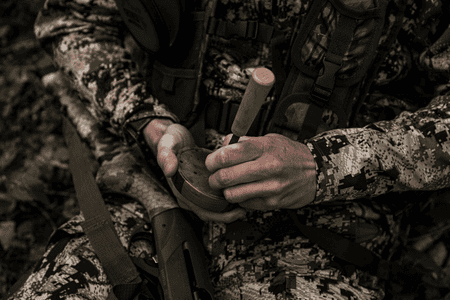
Friction calls, including slate, glass, crystal and aluminum surfaces, let you create realistic hen sounds by dragging a striker across the call surface. They bridge the gap between box calls and mouth calls in terms of both volume and required skill.
Slate surfaces produce softer, more natural tones perfect for working close-range birds. Glass and crystal run louder with higher-pitched sounds that cut through distance. Different striker materials; wood, carbon, plastic; change the sound character. This versatility lets you adjust your calling based on how birds respond and how far away they are when you make contact.
The learning curve sits between mouth calls and box calls. Most hunters pick up basic yelps within an hour of practice. Fine-tuning your cadence and tone takes longer but comes naturally with field experience.
Pot calls require one hand to hold the call and one to work the striker. This limits your shooting readiness compared with mouth calls. Weather affects performance too; moisture on the surface kills friction until you dry and rough up the call face with sandpaper or a conditioning stone.
Other Turkey Call Options
Push-button calls let absolute beginners make turkey sounds by pressing a button or peg. The spring-loaded striker hits an internal surface to produce automated yelps. These work for kids or mobility-impaired hunters but lack the realism and versatility of other options.
Tube calls amplify your voice through a tube with a latex reed. They produce raspy, aggressive sounds that work well for locating birds or cutting through thick cover. Wing bone calls represent traditional turkey hunting at its finest. Carved from actual turkey wing bones, these calls produce subtle, realistic sounds but require significant practice and offer limited volume. Gobbler shakers mimic gobbles mechanically; useful for locating birds or triggering responses from subordinate toms, but you’ll still need hen calls to work birds into range.
Choosing the Right Call for Your Hunt
Match your call selection to the hunting situation. Early season birds often respond to soft, subtle calling from slate or mouth calls. As breeding winds down, more aggressive box call sequences and cutting can pull in stubborn toms.
Matching Calls to Terrain and Weather
Terrain matters. Open fields benefit from the volume of box calls to reach distant birds. Thick timber requires the close-range finesse of mouth calls or slate. Weather conditions play a role as well:
- Moisture limits friction call performance (box and slate calls)
- Mouth calls work in any weather once positioned properly
- Keep backup options ready for changing conditions
Building Your Call Arsenal
Most successful hunters carry multiple call types. Start with a box call to locate birds. Switch to a mouth call or slate as they approach. Keep backup options in your vest for different weather conditions and bird moods.
The right call is the one you practice with and trust. Spending time with your calls before season opens builds confidence that translates to better field performance. Focus on mastering one call type before adding others to your rotation.
Ready to Build Your Turkey Call Arsenal?
Shop our complete selection of turkey calls to find the perfect combination for your hunting style. From diaphragms to friction calls, we carry field-tested options that produce realistic sounds when it matters most.
Frequently Asked Questions
What is the easiest turkey call for beginners?
Box calls and slate calls offer the shortest learning curve for new turkey hunters. You can produce realistic yelps within minutes of picking up either call type. Box calls deliver more volume, while slate calls give you better control over soft, subtle sounds. Push-button calls are even simpler but sacrifice realism and versatility.
Can you use multiple turkey calls during one hunt?
Yes, and most experienced hunters do exactly that. Switching between call types changes the sound enough to maintain a turkey’s interest. Different calls also work better at different ranges; loud box calls for distance, soft mouth calls up close. Just make minimal movement when switching calls to avoid spooking nearby birds.
What time of season works best for different calls?
Early season birds often respond best to soft, subtle calling from slate or mouth calls when breeding activity peaks. Mid to late season, as hens start nesting, more aggressive calling with box calls can pull in lonely toms. That said, bird behavior varies by region and year. Carry multiple call types and adjust your approach based on what the birds tell you in the field.