









If you have typed “deer calls not working” into a search bar after another quiet sit, you know the feeling. The grunt sounded right. The bleat was timed well. The buck either never showed, stopped short of the clearing, or looked once and walked off.
Most hunters assume a quiet response means a broken call or bad technique. In our experience building calls for serious whitetail hunters, the real problem rarely sits with the sound itself. It’s timing, pressure, or setup. This is a troubleshooting guide for the hunter who already knows how to call and wants to know why it stopped working.
The Real Reason Deer Calls Fail Is Usually One of Three Things
When a call goes unanswered, the instinct is to blame the sound. The sound is rarely the problem. Three things are usually at play instead: the wrong message for the buck’s current mood, the wrong moment in the season, and a setup that gives the deer no safe reason to walk toward the sound. Separating a sound issue from a deer-behavior issue starts with asking which of those three actually fits what happened in the woods.
The Rut Phase Changes How Buck Calls Are Received
A grunt that pulls a buck across a field in mid-November can fall flat in early October, and that has nothing to do with the call itself. Early in the season, before does are receptive, aggressive challenge grunts tend to educate deer rather than pull them in. As the rut builds, a buck has more reason to look, since he is already moving, already checking scrapes, and already primed to answer a rival’s voice. Matching the message to that shift is the foundation of effective calling, which is why we built our whitetail call lineup around tunable tones instead of one fixed sound.
Your Call May Be Too Loud, Too Early, or Too Generic
Pressured deer learn fast. A loud, aggressive challenge grunt blasted at every shooter buck on a property eventually teaches local deer to avoid the sound instead of investigate it. Blind calling into cover carries the same risk, since a hunter cannot read how the sound landed and adjust. Subtle, short sequences often outperform loud ones once deer have been hunted hard, because realism matters more than volume. A buck is listening for a believable deer, not the loudest one.
Grunts Fail When They Do Not Match the Buck’s Attitude
A social, low-volume grunt tells a buck another deer is just passing through. A hard, guttural challenge grunt tells him a rival is squaring up for a fight. Using the wrong one at the wrong moment is why some bucks stop, stare, and walk away without closing the distance. A dominant buck already locked onto a doe may ignore a social grunt entirely, while a younger buck might spook at a challenge tone he is not ready to answer.
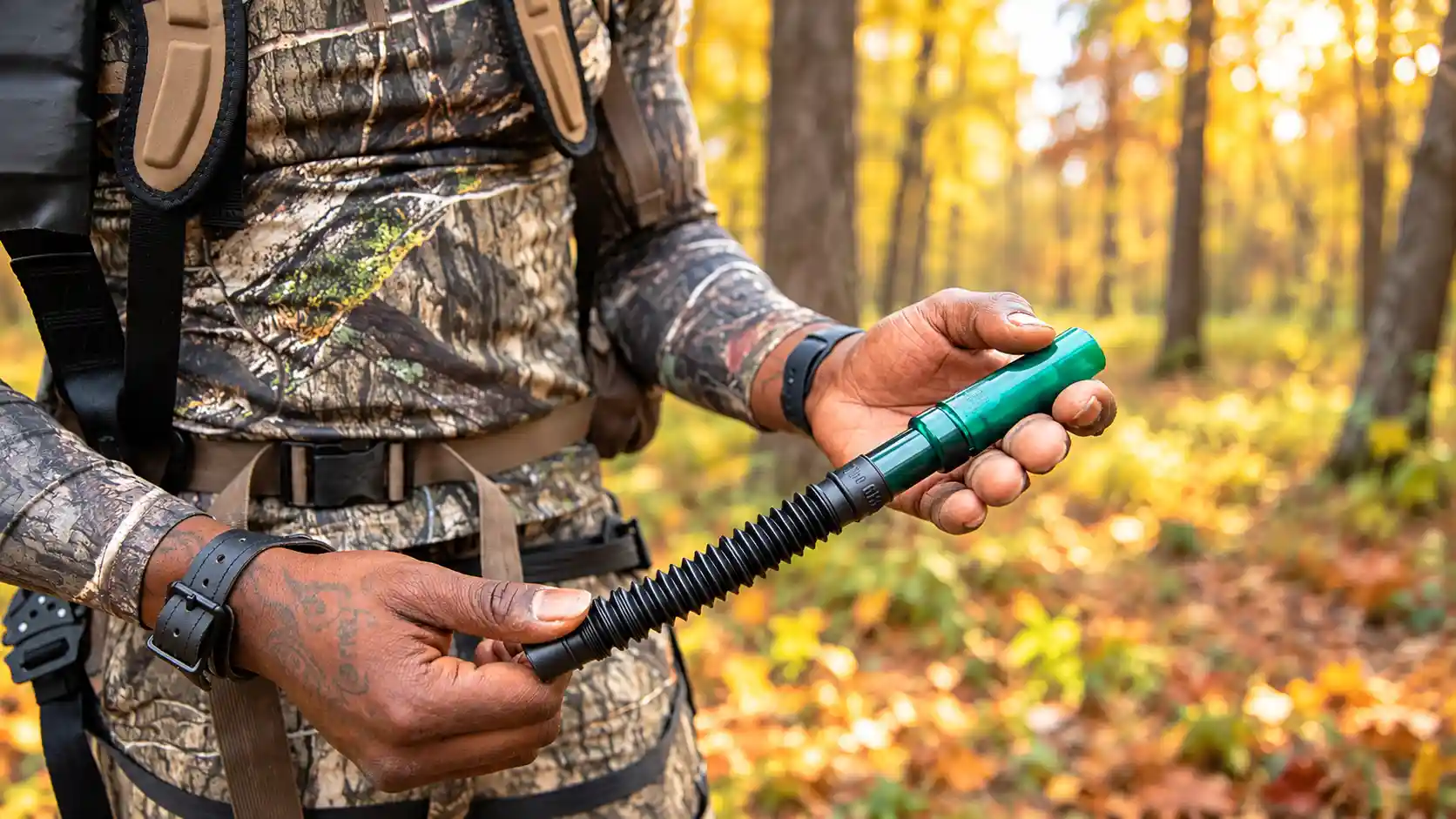
Reading the buck’s attitude before choosing a tone matters more than which call is in your hand. Our Bully Grunt Deer Call’s tunable O-ring and directional tube let a hunter dial in that read, from a social grunt to a hard challenge, without swapping equipment.
Doe Bleats Work Best When the Deer Already Feels Breeding Pressure
A doe bleat is not a magic button. It works best when the woods already feel like the rut, meaning does are moving, and bucks are cruising with breeding pressure already building. Used too early, a bleat can sound forced because the buck’s behavior doesn’t match what the sound implies. Used at the right time, it taps into real curiosity, especially when a buck is already searching for the doe who made it.
Rattling Fails When There Is No Real Competition in the Woods
Rattling tells a buck that two rivals are fighting over a doe. On ground with low buck density, or outside the window when bucks actively compete, that story falls apart, and the rattling becomes background noise instead of a trigger. A believable sequence needs enough competition for the fight to make sense, and louder rattling isn’t automatically better. A buck that has never had to fight for breeding rights has no reason to investigate one.
Pressure Makes Mature Bucks Ignore the Obvious
This explains the most frustrating quiet sits. A call that worked in October can go unanswered once pressure builds, not because the buck failed to hear it, but because he has already changed how he moves. Research from Mississippi State University’s Deer Lab found that once gun season opened, daytime cover use among adult bucks rose by 240 percent. In comparison, hunter sightings of those same collared bucks fell by 62 percent, a pattern researchers call the disappearing buck effect.
That is not a sign calling stopped working. It means the deer on your property have already adjusted their daily pattern, so a call needs to meet a buck where he is now, not where he was during opening week. Understanding that shift is what lets a hunter adjust the plan instead of calling louder and hoping.
The Setup Can Undercut a Perfect Call
A deer can hear a flawless grunt and still refuse to walk toward it if the wind is wrong, the approach route crosses open ground, or the stand sits somewhere he has never felt safe. Many “the call did not work” stories are really setup stories, since a buck has to believe the path is safe before curiosity wins out over caution.
Stop Calling Like Every Buck Is Already Interested
Blind calling into empty woods differs from calling at a deer you can see and read. One sequence, followed by patience, often beats firing calls every few minutes, since the next call should reflect how the deer responded to the last one. If the first attempt gets no reaction, the best move is usually to stay quiet rather than call again right away. A company that sells calls has no real incentive to tell a hunter to stop calling, except that going quiet is genuinely what works.
A Simple Reset Plan When Bucks Won’t Respond
A few adjustments usually solve more than switching calls ever will. Start by slowing down, since a quiet five minutes often re-engages a cautious buck better than another grunt fired right away. Match the message to the rut phase rather than using the same sequence all season, then consider pressure before gear, since repeated identical calling from one stand teaches local deer to associate that sound with danger instead of opportunity.
Rework wind, approach route, and stand placement before assuming the call needs to change, and finally ask whether the deer in front of you is receptive, since a buck already locked onto a doe or already spooked is unlikely to answer no matter how you adjust the call.
What Gear Helps Deer Calls Work Better?
The right gear does not replace reading rut phase, pressure, and setup, but it removes one variable from the equation. Carrying one dependable grunt call, like our Bully Grunt Deer Call, instead of a pocket full of single-purpose calls means less fumbling in the stand and more attention left for the deer in front of you. Versatility matters more than owning every call on the market, since a hunter who can read mood and adjust on the spot will out-produce one still digging for the right call.
Built in Louisiana, Trusted by Whitetail Hunters Everywhere
The Grind Outdoors builds whitetail calls out of a Louisiana-based, veteran-owned shop as part of the Rock Ridge Outdoors family of hunting brands, alongside sibling brands like Dead Ringer Hunting and Mammoth Coolers. We design our whitetail call lineup for hunters working real, pressured ground rather than a controlled range, because that is the hunting we do ourselves. Our goal with every grunt tube and bleat call is simple: one piece of gear that adapts to rut phase and deer mood instead of forcing a single tone onto every situation.
Ready to Call Smarter This Season?
Stop guessing why a call went unanswered, and start adjusting what matters: timing, pressure, and setup. Dial in those three, and the right call does the rest. Shop our whitetail calls and find the tone built for where you are in the season.