









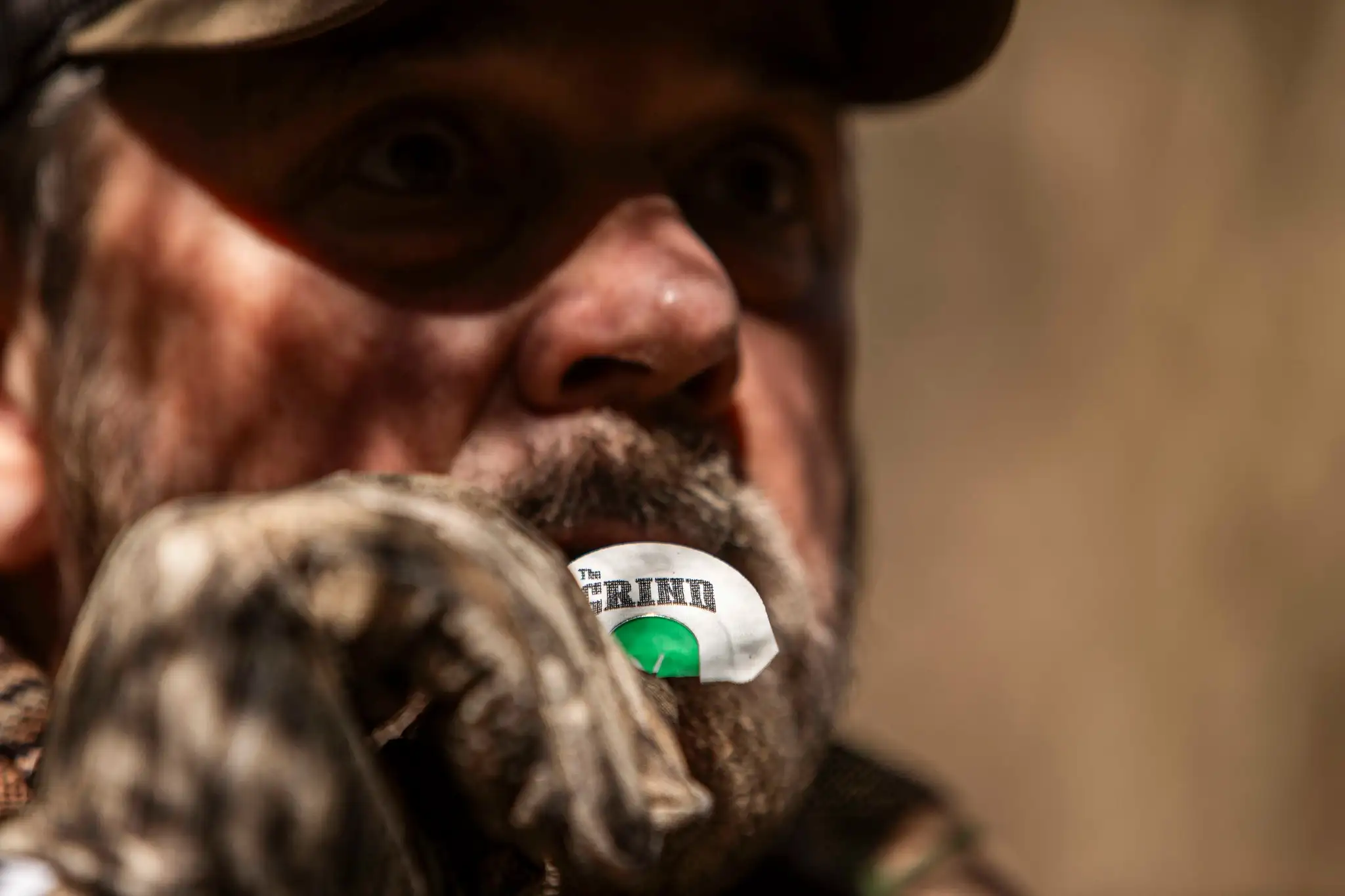
Calling can make or break a hunt, but whitetails and turkeys do not respond the same way. Texas Parks and Wildlife’s 2024-25 harvest estimates show a 66.69% success rate for white-tailed deer hunters compared with 42.00% for turkey hunters. That difference helps explain why hunters need species-specific calling techniques instead of relying on the same approach in the woods.
How Deer and Turkeys Communicate Differently
Whitetail deer rely heavily on scent and body language to communicate, with vocalizations playing a secondary but still important role. A buck grunt carries information about dominance and location. A doe’s bleat signals availability or distress. The vocabulary is relatively compact, and deer tend to respond to calling at specific windows tied to the rut and breeding season.
Turkeys, by contrast, are wired to communicate vocally from the moment they hatch. A tom has been hearing hen talk his entire life, which means he has a finely tuned ear for what sounds right and what does not. The implication for hunters is significant: turkey calling demands a wider range of sounds, more precise execution, and a sharper read of how a bird is responding in real time.
Whitetail Calling: Reading the Rut
Whitetail calling success is almost entirely tied to where you are in the season. Call at the wrong time, and you may as well be talking to yourself.
Pre-rut is the best time to run a grunt call. Bucks are establishing ranges and checking for does, making them responsive to the sound of a competing buck. A series of short, soft grunts can pull a buck off a distant trail or slow one that is moving through too fast to catch. The Bully Grunt Deer Call is built for exactly this moment, with a directional sound tube and an adjustable O-ring that let you dial in tone and volume for the specific buck you are working on.
During the peak rut, doe bleats become more effective because bucks are locked in on breeding. Rattling antlers, combined with grunt calling, create a more complete picture of a fight or a breeding chase that a dominant buck will often come to investigate. Post-rut calling tends to be subtle. Bucks are worn down and less aggressive, so soft grunts and light contact bleats work better than aggressive sequences.
The biggest mistake deer hunters make with calls is overcalling. Whitetail respond to the suggestion of another deer, not a full conversation. Less is almost always more.
Turkey Calling: Vocabulary, Timing, and Reading the Bird
Turkey calling rewards hunters who listen as much as they talk. A gobbler that is fired up and coming in hard does not need much encouragement. A bird that answers but hangs up on a ridge is telling you something about its mood, its position, and what it expects to happen next.
The core sounds every turkey hunter needs are the hen yelp, the cluck, the purr, and the cut. The yelp is the primary contact call. The cluck is softer and more conversational, used when a bird is close. The purr signals contentment and is deadly for finishing a hung-up bird. The cut is aggressive and loud, used to shock a stubborn gobbler into responding or to locate birds at a distance.
Call type matters as much as technique. Mouth calls give you the most flexibility with both hands free, but they take time to master. Box calls are the easiest to learn and can produce loud, realistic yelps that carry on windy days. The Grinder Box Call, hand-tuned and crafted with a cherry lid and quarter-sawn sycamore, is a go-to for hunters who want real volume with natural tone. Slate and glass pot calls produce a softer, more nuanced sound that works especially well for close work and pressured birds.
Locator calls are a separate category entirely. Owl hooters and crow calls are used to shock a gobble out of a tom without pulling him toward your position. They tell you where he is roosted or how far off he is without burning a call.
How Hunting Pressure Changes the Game for Both Species
One area where whitetail and turkey calling techniques genuinely converge is the effect of hunting pressure. Both animals pattern hunters over time, and both become call-shy when they associate certain sounds with danger.
A pressured whitetail buck that has heard grunt calls all season learns to avoid them rather than investigate. In pressured areas, the most effective move is often to scale back to softer, less frequent contact sounds or to stop calling altogether and rely on scent control and stand placement.
Pressured turkeys respond similarly, but with one key difference: they can still be called in, but the approach has to change. A gobbler that has been run at, spooked, or called to aggressively will hang up, circle, or go silent.
Working with him with soft clucks and long silences, letting him feel like he is in control of the approach, is often more effective than trying to fire him up with aggressive cutting. The ability to read that shift and adjust mid-hunt separates average callers from dangerous ones.
Putting It Together
Whitetail and turkey calling are different disciplines, but they teach the same underlying lesson: the hunter who understands animal behavior makes better decisions in the field than the one who just knows which call to grab. Timing, restraint, and the ability to read a response in real time matter more than the call itself.
The gear still has to hold up its end of the deal. Browse turkey calls for sale or shop deer calls for sale at The Grind and get set up with field-tested calls built by hunters who have worked both seasons hard.