









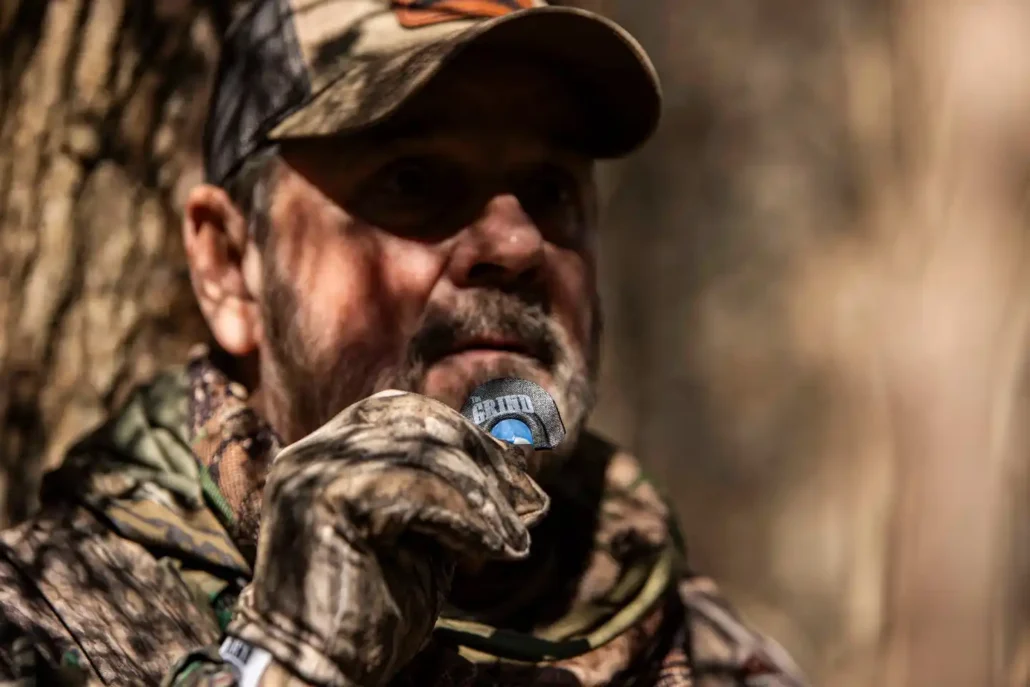
You hear him gobble at first light. He answers every call, fires up on cue, and sounds like he’s coming. Then he stops. He gobbles again from the same spot. You call back. He gobbles. Nothing moves. The morning burns down while a bird you can practically see sits frozen just out of range.
A hung-up gobbler is one of the most frustrating situations in turkey hunting, and it’s also one of the most common. According to the National Wild Turkey Federation, hunter success averages around 45%, meaning most hunters go home without a bird.
The hung-up gobbler accounts for a significant share of those empty mornings. Understanding why a bird stalls and what to do about it is the difference between a filled tag and a long walk out.
Read the Stall Before You Make Another Move
The worst thing you can do when a gobbler hangs up is immediately reach for a call. Before you change anything, watch the bird and diagnose what’s actually happening.
A bird that stops at a fixed distance and keeps gobbling is usually hitting a physical or psychological barrier. A bird that circles without committing is working toward you but can’t find a clean approach. A bird that responds to calls but won’t move is often already with a hen or a group of hens.
A bird that goes quiet but hasn’t flushed is still close, likely watching, and needs a completely different approach than one that’s still gobbling.
The right fix depends on which of these you’re dealing with. Calling harder into any of these situations without reading the bird first is how hunts end early.
The Gobbler Is Stopping at a Physical Barrier
Terrain blocks more hunts than bad calling does, and most hunters never consider it. A creek, fence line, terrain dip, open gap, or patch of thick cover between you and the bird can be enough to make him stop. Gobblers don’t like crossing obstacles they can’t see through, and they won’t walk into an area where they feel exposed or lose footing.
If a bird is consistently stopping at the same spot, there’s likely something there. When terrain is the problem, calling harder won’t fix it. Moving to the other side of the barrier, if you can do it quietly, often solves the problem faster than any call sequence.
A realistic decoy visible on the bird’s side of the barrier also gives him a reason to push through. The Reaper Quarter Body Strutter is built for exactly this situation, presenting a dominant visual that challenges a gobbler’s instinct to hold back and a Lay Down Hen alongside it creates a setup that’s hard for a long beard to ignore.
Your Calling Tone Doesn’t Match the Situation
A gobbler at 80 yards is in a different mental state than one at 200 yards. Loud, aggressive cuts that fired him up from across the ridge can push him back when he’s close enough to expect to see a hen. If he can hear you at that distance and no hen appears, the calling starts working against you.
Mid-range birds need softer, more conversational sounds: gentle yelps, quiet clucks, and subtle purrs that suggest a hen feeding and relaxed rather than excited. This is the moment to switch to a call that lets you control your volume precisely.
The Pusher Easy Button Friction Call gives you that kind of tonal control with one hand, letting you dial back without sacrificing consistency. A mouth call like the Red Poison or a glass pot like the Glass Ghost can also produce the soft, precise sounds that close birds respond to better than aggressive cutting.
Live Hens Are Pulling Him Off the Line
If a gobbler keeps answering but won’t move, look for hens. A tom with real hens nearby has no reason to come to you. He’s already got what he wants, and your calls are competing with the actual birds in front of him.
Signs that hens are involved include the gobbler changing direction gradually, other birds yelping or moving in the background, and a bird that gobbles enthusiastically but consistently fails to close any distance. When hens are the problem, the strategy shifts.
Calling aggressively to the hens rather than the tom can trigger jealousy and pull the group toward you, bringing him along. Patience matters here too. If the hens eventually lead him away, backing out and setting up fresh the next morning on his travel route often produces a cleaner opportunity.
Hunting Pressure Is Making Him Cautious
By mid-season, gobblers on pressured ground have heard a lot of calls. They’ve learned to approach cautiously, hang up at a distance, and wait for confirmation before committing. A bird that was easy to work during the opening week may be nearly impossible to move a month later using the same setup and sounds.
On public land especially, birds that have been called to multiple times become pattern-aware. They’ll gobble, hold their position, and wait for a hen to come to them rather than the other way around.
Adjusting to pressured birds means using softer, less frequent calling, varying your call sequences so nothing sounds rehearsed, and leaning more heavily on realism in your decoy setup than on calling volume.
Moving Closer Works Better Than Calling Harder
When a bird is locked at a distance, and calling isn’t moving him, closing that distance yourself is often the smarter play. This doesn’t mean charging through the woods. It means using terrain, reading the bird’s position, and making a controlled move that puts you in a better spot without bumping him.
Move when the bird is gobbling or drumming, which masks sound, and use any available cover to stay out of its line of sight. A shorter distance to the bird changes the dynamic entirely: calls sound different, decoys look more convincing, and the bird’s commitment threshold drops when he feels the hen is right there rather than somewhere ahead.
Silence Can Pull Him Those Final Yards
Once a gobbler is close, going completely quiet is one of the most effective tools at your disposal. It sounds counterintuitive, but when a bird is hung up at 60 or 80 yards, continued calling can become noise he’s tuning out. Silence creates curiosity. He expects a hen to be there. When the calling stops, he has to come find out why.
The key is timing. Silence works best after you’ve established a calling sequence and the bird is close but not committed. Dropping calls for five to fifteen minutes after the last exchange gives him time to work toward you on his own terms. If he goes quiet at the same time, don’t assume he’s gone. Wait him out. Drumming birds rarely leave without revealing themselves.
Your Setup Needs a Clear Finish Point
A gobbler that can see your position from a distance needs a reason to walk all the way in. If your setup is cluttered, the approach isn’t clear, or there’s no visual anchor pulling him forward, he’ll stop where he feels comfortable and wait.
Decoy placement is about creating a landing zone he can commit to. Position your decoys in an open area the bird can see clearly from his approach line, with enough space for him to strut in without feeling crowded.
A strutter decoy challenges his dominance and gives him a target. A hen decoy alongside it completes the picture. The Turkey Decoy Bag keeps your spread protected and ready to deploy quickly when a setup opportunity opens up on a run-and-gun morning.
Knowing When to Back Out Saves More Birds
Not every hung-up gobbler is going to commit that morning, and pushing too hard is the fastest way to educate a bird you could have killed the next day. If you’ve worked through your adjustments and the bird still won’t move, backing out quietly and cleanly is the right call.
Leave him undisturbed, note exactly where he was, and come back with a better setup or a different approach angle. A bird you back out on is a bird you can hunt again. A bird you’ve bumped hard is one that may disappear from that area entirely.
Quick Field Checklist for Hung-Up Gobblers
- Check for terrain barriers between your position and the bird before changing your calling strategy, since physical obstacles cause more stalls than poor calling does.
- Drop your calling volume when the gobbler is within 100 yards, because loud aggressive calling at close range sounds wrong and pushes birds back rather than pulling them forward.
- Watch for hen activity around the gobbler, since a tom already with real hens requires a different strategy than one working toward you alone.
- Consider moving closer using terrain and cover when calling isn’t closing distance, because cutting 40 yards off the gap changes the dynamic entirely.
- Stop calling completely for 10 to 15 minutes once the bird is close, because silence creates curiosity and a gobbler that expects a hen nearby will often close the final yards on his own.
- Set your decoys with a clear, open approach lane so the gobbler has a visible reason to walk all the way in rather than stopping at the edge of his comfort zone.
What Gear Helps You Finish a Hung-Up Gobbler
Having the right call for the moment and a decoy setup that creates visual commitment gives you more options when a bird stalls. The Three Ridges Locator Box Call reaches birds at a distance to locate and fire up a gobbler. The Grinder Box Call delivers crisp, carrying tones when you need to pull a bird across a ridge.
The Hardwood Honey produces warm, natural hen sounds ideal for close-in situations where precision matters more than volume. Pair any of these with a realistic strutting and hen decoy setup, and you’ve got the tools to work through a hang-up from any distance. Browse the full lineup at The Grind shop.
The Grind Outdoors: Built for the Hunts That Test You
At The Grind Outdoors, we build calls and decoys for the moments that matter most, including those when a bird is close but won’t commit. Veteran-owned and based in Minden, Louisiana, our team designs gear around real hunting pressure, varied terrain, and the kind of situations that separate a good setup from a finished hunt.
Every call in our lineup is built for the hunters who keep grinding until the bird drops.
Ready to Stop Losing Gobblers Just Out of Range?
The right approach and the right gear make all the difference when a gobbler hangs up. Stop leaving birds in the field and start finishing your hunts with confidence.
Shop turkey calls, decoys, and gear at The Grind Outdoors and build the setup that closes the deal.