









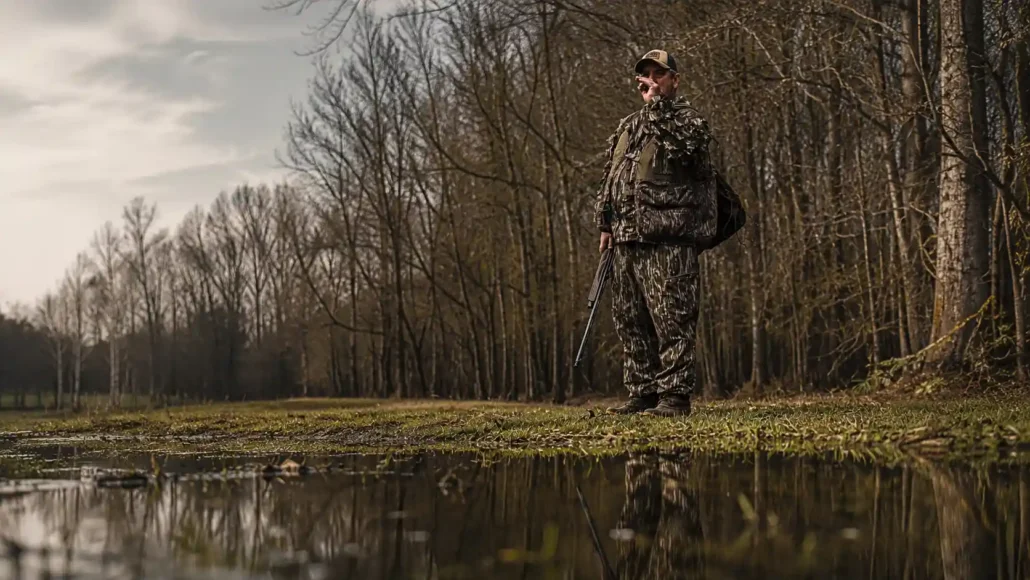
You hear it every spring in camp. A hunter swears a gobbler was coming, then just stopped. No shot, no explanation, just a long walk back to the truck wondering what went wrong. Most of the time, the bird did not simply lose interest. Something in the conversation between hunter and turkey broke down.
Turkey calling mistakes rarely come down to a hunter’s inability to run a call. They come down to calling that sounds wrong for the bird’s mood, the pressure level on that property, or the setup underneath it all. The fix is not calling louder or more often. It is learning to read what the bird is telling you and adjusting your side of the conversation to match.
The Mistake Most Hunters Make Before They Even Blow a Call
Most calling mistakes start before a single yelp leaves the call. Hunters walk into the woods already set on a strategy: call loud, call often, call aggressively, because that is what worked on a fired-up bird two seasons ago. The trouble is that not every gobbler is that bird, and treating every tom like an excited, ready-to-commit gobbler ignores everything else he might be telling you.
A gobbler that gobbles once and goes quiet is not the same animal as one that cuts you off mid-yelp and gobbles on his own. Reading that difference before you call again is a strategy decision, not a sound decision, and it is where most calling mistakes actually begin.
Sounding Too Perfect Can Work Against You
Real hens are not clean, polished, or identical from note to note. They break notes, trail off, and repeat themselves in ways that would sound like a mistake if a hunter did it on purpose. Pressured birds have heard plenty of competition-level calling from other hunters on the same property, and a little imperfection can read as more believable than a flawless sequence.
This does not mean sloppy calling is the goal. It means variation matters more than polish. A call like the Purple Pain, built for sharp cuts and loud yelps, gives you the range to run aggressive and rough when a bird wants excitement, then ease into something softer when he does not.
Calling Too Much Shuts Birds Down Fast
Frequency matters as much as tone. A gobbler that answers your first sequence has already told you he knows exactly where you are. Calling again immediately does not add information, it adds pressure, and pressure is what turns curiosity into caution.
The difference between enough calling and too much calling usually comes down to restraint after a response, not more calling before one. Once a bird commits to closing the distance, easing off and switching to something with a different pitch, like a glass call, often keeps him coming instead of second-guessing why the hen keeps repeating herself.
The Glass Ghost delivers that crisp, high-pitched tone specifically for those close-quarters moments when less volume does more work than more calling would.
Using the Same Call All Season Limits Your Results
Relying on one call type all season is a hidden weakness. Box calls, friction calls, and mouth calls each shine in different situations, and pressured birds respond differently to different tones because they have simply heard fewer imitations of some sounds than others.
Owning more calls is not the point. Switching tools with intention is. A box call like The Grinder reaches distant, undecided birds with a louder, more resonant tone than a mouth call typically can, giving you a genuinely different option when a stubborn gobbler has stopped responding to whatever you started with.
The Bird’s Temperature Matters More Than Your Favorite Sound
Every hunter has a go-to call and a go-to sequence. Neither matters if it does not match the bird in front of you. A gobbler fired up and gobbling on his own wants excitement and confidence in return. A cautious, henned-up, or call-shy bird wants patience and restraint, sometimes almost no calling at all.
Reading a gobbler’s temperature means paying attention to how he answers, not just whether he answers. Aggressive, unprompted gobbling calls for matching energy. Single, hesitant gobbles call for backing off and letting him make the next move.
Hunting Pressure Changes What a Gobbler Will Tolerate
Public land pressure and repeated calling exposure change a bird’s tolerance for mistakes that would not matter early in the season. A USDA Forest Service study tracking hunted and non-hunted Merriam’s turkey populations in South Dakota’s Black Hills found that during the hunting period, hunted gobblers averaged 4.56 gobbles per survey compared to 7.01 for birds in a non-hunted population monitored at the same time, a statistically significant drop.
Hunting pressure alone measurably quiets birds down before a hunter ever makes a calling mistake.
That means the same sequence that worked on opening weekend can shut a bird down completely by week three. Selective, cautious birds have learned to associate calling with risk, so cadence has to soften and slow as the season and the pressure on a property build.
Bad Setup and Bad Calling Often Happen Together
Calling from the wrong place can make good sound useless. Visibility, distance, and terrain all shape whether a bird can actually close the gap even when he wants to. A gobbler may hear you clearly, commit to coming, and still refuse to close the last fifty yards because open ground, a fence line, or a creek bed sits between you and him.
What looks like a calling mistake in hindsight is often a setup mistake wearing a calling problem’s clothes. Setup and calling function as one system, and fixing the wrong half of that system will not solve a stalled bird.
Mistiming Silence Can Be Just as Bad as Overcalling
Silence is part of the conversation, not the absence of one. Hunters lose birds by staying too loud just as often as they lose them by freezing up and going silent too early. A well-placed pause after a strong response can pull a hesitant gobbler the rest of the way in, while a nervous, too-early silence right when a bird is working can leave him uncertain enough to hang up and lose interest.
Pauses tell a bird something, just like calls do. Learning to use silence deliberately, rather than defaulting to it out of nerves, is part of running a full sequence instead of half of one.
A Better Approach for Stubborn Birds
When a bird stalls, the instinct is to throw everything at him at once: louder, then softer, then a new call, then silence, all within a few minutes. That approach makes it impossible to know what actually worked, or what pushed him further away. A more useful rule is to change one variable at a time and give it real time to play out before trying the next.
If a bird stalls, check whether your setup gives him a clear path to close the distance before touching your calling at all. If setup checks out, try easing back rather than escalating, and give that room to work before switching calls.
Only fall quiet as a next step, not a first one. Stubborn birds are rarely solved by doing everything right at once. They are solved by ruling out one wrong guess at a time.
The Fastest Fixes for Turkey Calling Mistakes
The short answer: call less, not louder, and let your calling sound a little imperfect instead of chasing a polished, competition-style run. Rotate call types when a bird stops responding to your first choice.
Read the bird’s mood before deciding how aggressive to get, and respect that hunting pressure has already made him more cautious than he would be on opening day. If a bird stalls and won’t close, check your setup before blaming your sound.
Why Hunters Trust The Grind Outdoors for Real-World Turkey Hunts in Minden, Louisiana
At The Grind Outdoors, we build calls and gear out of Minden, Louisiana, for hunters chasing pressured, educated birds, not just calm opening-morning gobblers.
As a veteran-owned member of the Rock Ridge Outdoors family, our calls are designed for the scenarios covered here: adjusting tone for a call-shy bird, switching call types mid-hunt, and giving hunters the range to go from loud and aggressive to soft and natural without swapping their whole setup.
That focus on real field conditions, not beginner-level advice, is why hunters keep coming back to our lineup season after season.
Ready to Call with More Confidence This Season?
Once you know which mistake has been costing you birds, fixing it usually just means adjusting how or when you call, not overhauling your whole approach. Shop turkey calls built for real hunting conditions and get the sound variety to match whatever mood a gobbler throws at you this season.